
Rodriguez describes his younger self as the "scholarship boy". When the Spanish language was "taken" from him, he no longer knew how to be intimate with his family and so he dug into his studies. Rodriguez did not just love to study; he was trying to hide from his problems because he didn't know how to fix them. This caused him to become more and more distant from his family. After he was out of school he realized that his studies had kept him from them for a time, but by becoming "educated" he could now get closer to them in a different way.
Later in his life, Rodriguez admits that he misses the time when he wasn't so lonely. He now wants more than just the books, the education; he needs the companionship as well. "I yearned for the time when I was not so alone" (71). Rodriguez learned, from his mistakes, that family was important too and that he still loved being with HIS family, just like that 5 year old, knowing only 50 words of English, had.
Section 3-1

He then begins to explain how religion affected his life. His parents had been devout "Catolicós". They told him that he was 'lucky' because God 'chose' him to be nurtured in the Catholic Church, but that non-Catholics somehow got to heaven as well. The masses of "los gringos" were a little different, but they shared a common religion with his family and so Rodriguez felt connected by it. As a child the nuns tried to keep him out of the "non-catholic" world, but he applied to public colleges anyway. "I would remain a Catholic, but a Catholic defined by a non-Catholic world" (80). Rodriguez was first "un catolic". He learned his first prayers in Spanish. As he grew older and went to public school he learned many things about this religion. He was always memorizing prayers and other important parts of his religion.
The way that he describes religion's connection with his life, when compared to the way he described his childhood before introducing religion, shows that religion had helped him cope to with the thin
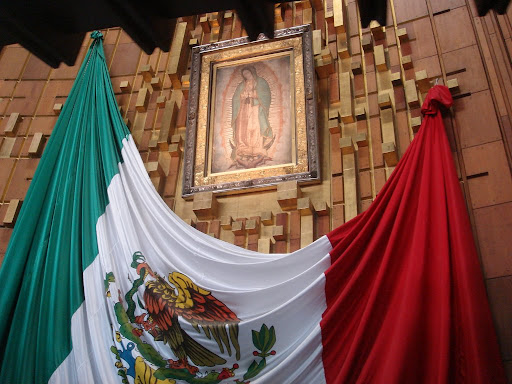 gs he was unfamiliar with. I think that religion is like that a lot of times. People follow it because it makes them feel as if someone cares. But, just as he said, it was a religion of rituals. It was all do this at this time and that at that time. It's a shame that sometimes we loose the big picture and forget that Jesus isn't just part of our religion, but that we can have a relationship with him. Religion was tightly intertwined with Richard's education and I think he learned a lot of moral values from it. It also kept him connected and helped him survive through the hard times of being "the different one". "I would cry in the void. ... If I should lose my faith in God, I would have no place to go to where I could feel myself a man." (108)
No comments:
Post a Comment